Is the 12VHPWR GPU Connector Safe?
Yes, when installed the way the documented failures say to: the 12VHPWR/12V-2x6 connector's melting incidents are tied to partially seated connectors and tight cable bends near the plug — so seat it fully until it clicks, keep a gentle bend radius, and use only the exact cable or adapter the GPU manufacturer specifies, never a generic third-party one.
The one thing to know: GPU power connectors are not interchangeable by appearance alone. Legacy 8-pin PCIe connectors (used alone or in pairs) have a proven safety record; the newer 12VHPWR / 12V-2x6 connector (used on many current high-end GPUs) has had documented connector-melting incidents tied to partially-seated connectors and tight bend-radius cabling — full seating and avoiding sharp cable bends near the connector are the documented mitigations. Always use the adapter or native cable the GPU manufacturer specifies, not a generic third-party cable.
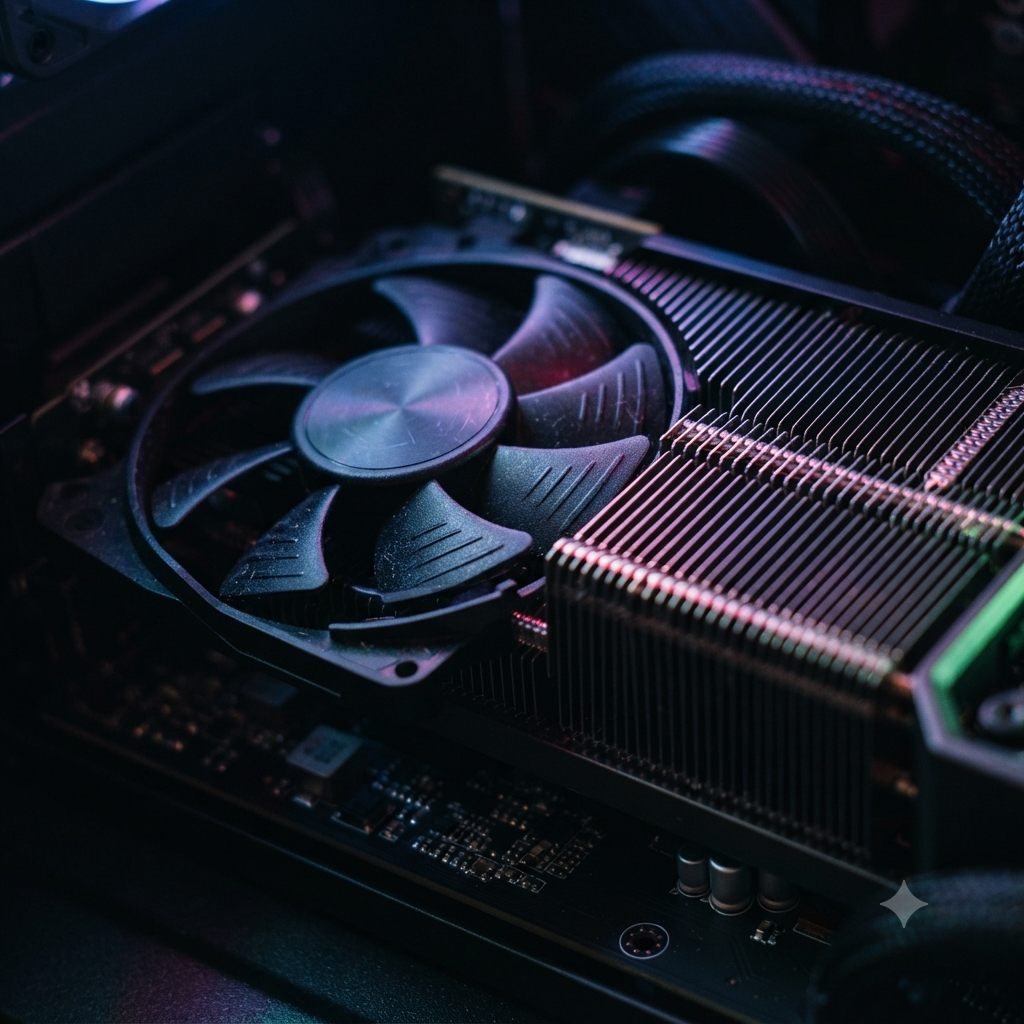
Why one small plug carries so much risk
A legacy 8-pin PCIe connector carries 150W and has a long, boring safety record — cards that need more power simply use two or three of them. The 12VHPWR/12V-2x6 connector pushes up to 600W through a single, smaller plug. That concentration is the whole story: a partial connection or a stressed bend that an 8-pin would shrug off becomes a documented melting risk at 600W.
The two documented mitigations
First, full seating — push the connector in until it is completely home and clicked, and verify it after routing cables, since tugging the bundle can partially unseat it. Second, bend radius — do not force a sharp bend immediately behind the connector to clear a glass side panel; leave slack and a gentle curve. These are not folklore; they are the failure conditions the documented incidents share.
Use the cable the card maker specifies
Connectors are not interchangeable by appearance. Use the native cable or the exact adapter the GPU manufacturer ships or specifies — that is the configuration the card was validated with. If you are pairing a 12VHPWR-class card with a new build, a modern ATX 3.x power supply with a native 12V-2x6 cable keeps the chain simple; our PSU classes in the build guides are sized with headroom for exactly the millisecond power spikes these cards produce.
Search ATX 3.0 power supplies on Amazon
This page is general engineering guidance, not a specific compatibility guarantee for your exact build.
Frequently Asked Questions
The documented incidents are tied to two things: connectors that were only partially seated, and tight cable bends close to the connector body. Full, clicked-in seating and a gentle bend radius near the plug are the documented mitigations — the revised 12V-2x6 design also addresses seating.
They have a much longer track record. A legacy 8-pin PCIe connector carries 150W and has decades of proven field use, alone or in pairs. The newer 12VHPWR/12V-2x6 connector carries up to 600W through one plug, which is exactly why seating and bend radius matter so much more.
Don't. Always use the exact adapter or native cable the GPU manufacturer specifies — generic third-party cables are a documented risk factor, and the manufacturer's cable is the configuration the card was validated with.
Not necessarily — many cards ship with a manufacturer adapter from legacy 8-pin connectors. A modern ATX 3.x PSU with a native 12V-2x6 cable removes the adapter from the chain, but either way the card maker's specified cable or adapter is the requirement.